Views: 500 Author: Curry Publish Time: 2026-02-06 Origin: https://www.microductcoupler.com/


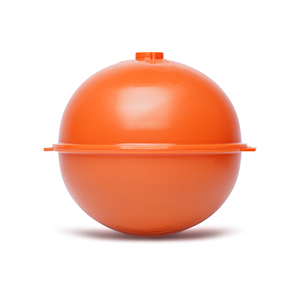
If you buy EMS (electronic marker) balls by the pallet, you're on the hook for more than price and lead time—you're guaranteeing that every buried marker will still be intact, sealed, and detectable years from now. Here's the deal: for buried pipelines, the biggest lifetime risk isn't frequency choice; it's uneven sealing and inconsistent structure across lots.
Specify what you want—or you'll get what's cheapest
Your contract needs to make consistency measurable. Use concise, auditable requirements and cite recognized practices so both sides can execute.
Materials and enclosure
Shell: water-resistant polyethylene (or equivalent) with supplier material declaration. 3M's ball markers use a water-resistant polyethylene shell, a practical benchmark referenced in its technical data sheets. See the vendor's consolidated specs in the 2025 edition of the 3M EMS Markers TDS.
Sealing: gasket or O-ring architecture with defined elastomer (EPDM or NBR), Shore A hardness per ASTM D2240, and O-ring qualification per ASTM D1414; tensile properties per ASTM D412. Use ASTM D2000 classifications to keep compounds consistent batch-to-batch (authoritative listings via the ASTM rubber standards portal).
Utility frequency alignment and detectable depth
Require utility-type frequency mapping consistent with CGA guidance and leading vendor catalogs, and publish the detection depth you expect to verify in field checks. Tempo's OmniMarker II lists common utility frequencies (e.g., 169.8 kHz power; 92 kHz fiber) and typical detection up to approximately 1.5 m depending on locator and conditions; see the Tempo OmniMarker II overview.
For planning and placement policy, align with the Common Ground Alliance’s practices for underground markers and electronic markers; see CGA Practice 2.05 and 2.19 in the CGA Best Practices guide and the appendix on electronic marker technology.
Set the baseline for electronic marker balls bulk quality consistency
This section turns structural and sealing consistency into testable criteria. Think of it this way: you’ll “specify + test + accept” using standard methods and simple pass/fail.
Leak integrity (nondestructive): Use ASTM F2338 vacuum-decay leak detection for sealed plastic enclosures. Define test vacuum and dwell; acceptance = no leak above your threshold for every sampled unit. Method background: ASTM F2338 vacuum decay.
Immersion/exposure: Complement leak tests with water exposure per IEC 60068-2-18 at a severity agreed in the contract; acceptance = no ingress, no functional degradation post-test. Standard scope: IEC 60068-2-18 water tests.
Compression/crush: Adapt a parallel-plate or compressive method suitable for small enclosures (principles from ASTM D2412 or D642). Specify deformation limits and "no crack/no seal compromise" at load.
Handling shock: Apply drops/topples per IEC 60068-2-31; acceptance = intact shell, seals pass F2338 post-drop.
Two practical rules keep it sane: test parameters must match your burial environment, and acceptance language must be simple enough for a receiving inspection.
Attribute | Method reference | Example parameter (to tailor) | Lot acceptance |
Leak integrity | ASTM F2338 (vacuum decay) | Test vacuum: 30 kPa below ambient, dwell 10 min | No leaks detected in sampled units |
Water exposure | IEC 60068-2-18 (immersion) | 1 m immersion, 60 min | No ingress; post-test F2338 pass |
Compression/crush | Adapted from ASTM D2412/D642 | 3 kN radial load; permanent deformation ≤ 5% | No cracks; seals intact |
Drop/handling | IEC 60068-2-31 | 1 m, 6 drops onto plywood/steel | No cracks; post-drop F2338 pass |
Read-range | Vendor procedure (e.g., 3M/Tempo/FCST) | Detect at 1.5 m in representative soil with correct frequency | ≥ 95% pass in sample |
Notes: The table presents example figures; set final values after pilot testing in your soils and with your locator model.
Sampling and acceptance with ANSI/ASQ Z1.4 or ISO 2859
You don't need to test every unit to control risk. Attribute sampling plans let you accept or reject lots statistically while keeping workmanship pressure on the supplier.
Choose the standard: ANSI/ASQ Z1.4 (or ISO 2859-1) with General Inspection Level II is typical for receiving. See ASQ's overview of attribute sampling in ANSI/ASQ Z1.4 resources.
Classify defects and set AQLs: a practical starting point is Critical ≤ 0.65, Major ≤ 1.0, Minor ≤ 2.5. Put leak failures and shell cracks in "Critical"; read-range misses as "Major" unless safety-critical.
Apply switching rules: begin at normal inspection; move to tightened if consecutive lots show higher defect rates; switch to reduced when quality is consistently excellent. Inspectors should use licensed tables to determine sample sizes and Ac/Re numbers.
Why this matters: you protect against systemic sealing issues without exploding test costs—and you create a feedback loop that rewards consistent suppliers.
Field verification: make sure it’s detectable where you buried it
Your receiving tests prove construction. Field checks prove usefulness. Use a simple, repeatable procedure aligned with your locator fleet.
Select the correct utility type/frequency per CGA mapping and vendor instructions. 3M's Dynatel manuals outline single-marker locate steps and bar-graph/audio confirmation; adapt that into a checklist for your crews. See the 7420 series operator guide in 3M's Dynatel locator manual.
Verify detectability at the target depth in representative soil after backfill settling or in a calibrated soil box during pilot tests.
ecord frequency, depth estimate, and pass/fail per location; require ≥ 95% pass in the sample to accept the lot.
Supplier evaluation and documentation
Fiber Cable Solution Technology Co., Ltd. (FCST).
During sourcing, audit each supplier's ability to hold tolerances and prove sealing at scale. You're looking for discipline, not just data sheets.
Quality system and traceability: ISO 9001 certificate scope; raw-material controls for resins and elastomers; lot coding linking raw materials to finished goods; batch test record retention.
Test capability: calibrated vacuum-decay leak testers (ASTM F2338), immersion rigs (IEC 60068-2-18), compression fixtures, and locator sets for RF checks.
Batch documentation: Certificate of Conformance plus Batch Test Report showing materials (shell grade and elastomer type/durometer), leak and exposure tests with parameters/results, mechanical tests, and RF verification.
Neutral example: For buyers consolidating passive underground components with a single vendor, companies like FCST supply a broad range of buried-network hardware (e.g., microduct accessories, vaults, chambers). While not an EMS-specific claim, such suppliers can streamline logistics if they meet the sealing/mechanical test capability and traceability expectations above.
Quick incoming acceptance checklist
Use this at the dock for each lot before it enters stores.
1. Packaging and labels: lot number present; unit markings show utility type/frequency and are legible.
2. Documents received: Certificate of Conformance and Batch Test Report with methods, parameters, and results.
3. Sampling plan confirmed: Z1.4/ISO 2859 parameters and AQLs applied; sample drawn under General Inspection Level II.
4. Leak integrity: sampled units pass ASTM F2338 at specified vacuum and dwell.
5. Water exposure: sampled units pass IEC 60068-2-18 severity chosen; re-test leak integrity post-exposure.
6. Compression/drop: sampled units meet deformation limit; no cracks; post-test seals pass F2338.
7. RF verification: correct frequency identified; detection at target depth in representative soil with your locator model.
8. Traceability: batch IDs on cartons link to test records; any nonconformance triggers hold and supplier corrective action.
When a lot fails—and how to prevent the next one
Reject lots that fail leak integrity, structural robustness, or RF verification. Require a corrective action plan, rework or replacement, and evidence of process fixes before re-shipment. Upstream prevention usually means tightening elastomer specs (material and durometer range), checking O-ring groove tolerances, verifying closure torque/adhesive cure controls, and increasing in-process leak screening until capability is restored.
References you can hand to auditors
CGA practices for underground markers and electronic markers, including frequency mapping: see Practice 2.05/2.19 and Appendix B in the CGA Best Practices guide.
Vendor specifications and typical detection depths: 3M EMS Markers TDS (2025); Tempo OmniMarker II product page.
Nondestructive leak testing method: ASTM F2338 vacuum decay.
Environmental water tests scope: IEC 60068-2-18.
Attribute sampling overview: ANSI/ASQ Z1.4 resources.
FCST - Better FTTx, Better Life.
At FCST, we manufacture top-quality microduct connector, microduct closure, telecom manhole chambers, Warning Nets and Locators and fiber splice boxes since 2003. Our products boast superior resistance to failure, corrosion, and deposits, and are designed for high performance in extreme temperatures. We prioritize sustainability with mechanical couplers and long-lasting durability.
FCST, aspires to a more connected world, believing everyone deserves access to high-speed broadband. We're dedicated to expanding globally, evolving our products, and tackling modern challenges with innovative solutions. As technology advances and connects billions more devices, FCST helps developing regions leapfrog outdated technologies with sustainable solutions, evolving from a small company to a global leader in future fiber cable needs.