Views: 500 Author: Curry Publish Time: 2026-02-10 Origin: https://www.microductcoupler.com/


Near-surface utility markers help crews relocate telecom and municipal assets without guesswork or disruptive digs. In 2026, buyers face two main families: passive EMS markers (disc/ball/near-surface) tuned to utility frequencies, and RFID/iD markers that bind unique IDs to GIS.

How we choose (methodology)
We weighted criteria to reflect how third-party locators and civil contractors actually work:
Detection & locating performance — 35%
Cross-locator compatibility — 20%
Durability & environmental resilience — 15%
RFID/GIS workflow readiness — 12%
Compliance & availability — 10%
Total cost of ownership — 8%
Data sources included: manufacturer technical data sheets, locator vendor compatibility notes (3M Dynatel, Vivax-Metrotech, Radiodetection , Leica), and publicly available product pages or datasheets. When depth specs are "max under ideal conditions," we call that out.
Comparison table — near-surface utility markers at a glance
Brand | Marker types | Frequencies | Max locate/read depth | Locator compatibility | Durability rating/IP | RFID/GIS support | Price band | Notable limits |
3M | Near-surface, disk, ball, full-range; EMS + iD | Standard utility set | Up to ~8 ft (full-range); ~3–6 ft (near/disk/ball) | EMS marker modes across 3M/Vivax/RD/Leica; 3M iD read/write on Dynatel | Poly shells; long in-ground life | 3M iD (read/write) | Premium; quotes | iD features primarily within Dynatel ecosystem |
FCST | EMS marker balls/discs | 83/101.4/145.7/169.8 kHz | ~1.5–2.8 m (model-dependent) | EMS marker modes across brands | Burial-rated; some fluid-filled | None (EMS only) | Factory quotes | U.S. compliance/stocking to verify |
Hexatronic Optobit | Marker balls (telecom etc.) | 101.4 kHz and others | Up to ~2 m (model-dependent) | EMS marker modes across brands | Burial-rated | None (EMS only) | Quotes | Regional availability varies |
Tempo | OmniMarker II discs/balls; OmniMarker-ID | Standard utility set | Up to ~5 ft (typical) | EMS marker modes across major locators; iD within Tempo ecosystem | HDPE; >40-yr life claim | OmniMarker-ID | Value; quotes | iD workflow less standardized beyond Tempo |
Berntsen (InfraMarker) | RFID underground tags/markers | UHF RFID (EPC Gen2v2) | Reads from surface; burial-rated | RFID readers + app; not EMS | IP68; rugged | Native Esri workflows | License + tags; quotes | Not discoverable by EMS locators |
Confidex/Omni-ID | Underground Marker Tag (RFID) | UHF RFID | Long-range UHF | RFID readers/apps | IP67–IP68 | EPC/user memory for GIS | Enterprise pricing | Not EMS; integration effort |
Komplex | RFID smart markers (ball/disc) | Proprietary RFID | Reader-dependent | Komplex SML ecosystem | Burial-rated | Komplex DB/app | Quotes | Not EMS; limited cross-compatibility |
EEDENG | EMS/RFID electronic markers | Standard utility set + RFID | Model-dependent | EMS modes (EMS SKUs); RFID readers (RFID SKUs) | Burial-rated | RFID options | Quotes | Public specs limited in English |
VAHILA (VHL) | RFID electronic disk markers | UHF RFID | Reader-dependent | RFID readers/apps | Burial-rated | EPC/user memory | Quotes | Limited global distribution |
Confidex (alt. form factors) | Burial-rated RFID tags | UHF RFID | Long-range UHF | RFID readers/apps | IP67–IP68 | GIS via EPC | Enterprise pricing | Not EMS; ensure reader pairing |
Notes: Depths and ranges vary with soil type, installation, and reader/locator model. Always validate on your job mix.
Buying considerations (read this before the list)
· Frequency-to-utility map (typical in North America): 77 kHz (CATV), 83 kHz (gas), 101.4 kHz (telephone/telecom), 121.6 kHz (sewer), 145.7 kHz (water), 169.8 kHz (power). See overviews from vendor manuals such as the marker-mode briefs by Radiodetection and manufacturer frequency tables from Tempo and 3M.
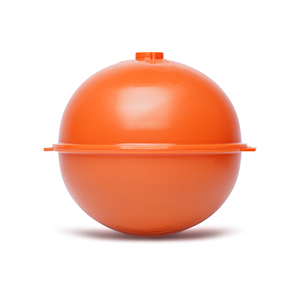
· Ball vs. near-surface disc: Ball markers self-orient and can reach deeper; near-surface discs minimize trench width and speed reinstatement on tight urban digs. Discs are ideal above shallow drops, customer hand-holes, and congested corridors.
· Locator pairing: Cross-brand EMS compatibility is about frequency, not logo. If your fleet mixes 3M Dynatel, Vivax-Metrotech, Radiodetection, and Leica, standardize on industry frequencies and verify "marker mode" support on each model. RFID/iD markers require RFID readers (and for 3M iD, Dynatel for full features) and GIS workflows.
· Spacing and interference: Keep extended range ball markers at least 1–2 m apart on the same frequency to reduce coupling and false peaks; avoid placing directly under metal covers; document depth/offsets in your as-built.
The Top 10 near-surface utility marker brands (ranked)
1. 3M — Broadest EMS family and mature iD ecosystem
· Marker types: Near-surface, disk, ball, full-range; EMS passive plus 3M iD variants.
· Supported frequencies: Standard utility set (e.g., 83/101.4/121.6/145.7/169.8 kHz).
· Locator compatibility: EMS markers detectable by major brands'marker modes; iD read/write on 3M Dynatel.
· Typical depths: Near-surface/disk/ball ~3–6 ft; full-range up to ~8 ft under ideal conditions.
· Durability & materials: Polyethylene shells; long in-ground life.
· Pros: Extensive portfolio; strong documentation; iD + Dynatel workflow maturity.
· Cons: Premium pricing; iD features mainly within Dynatel ecosystem.
· Best for: Utilities standardizing on Dynatel and mixed EMS fleets; programs needing iD memory.
· Price band & limits: Premium; quotes required; depth varies by soil/locator.
· Evidence: 3M's underground markers overview and Dynatel 1420X locator page document families, frequencies, and iD capabilities: 3M underground markers overview, 3M Dynatel 1420X EMS/iD locator.
2. FCST (Fiber Cable Solution Technology) — Full frequency EMS balls/discs
· Marker types: EMS marker balls and discs covering gas, telecom, water, and power frequencies; companion marker locator.
· Supported frequencies: 83/101.4/145.7/169.8 kHz (and others by model).
· Locator compatibility: EMS marker modes on 3M/Vivax/Radiodetection/Leica.
· Typical depths: ~1.5–2.8 m depending on model/soil.
· Durability & materials: Burial-rated; some models reference antifreeze fluids—validate environmental requirements.
· Pros: Broad catalog and competitive factory pricing.
· Cons: U.S. compliance/stocking and cold-weather performance require validation.
· Best for: Cost-sensitive, large-scale rollouts with mixed fleets.
· Price band & limits: Factory quotes; confirm compliance and lead times.
· Evidence: FCST family/spec pages show frequencies and detection ranges: Passive EMS marker family, 145.7 kHz example.
3. Tempo Communications — Value EMS discs/balls with OmniMarker-ID options
· Marker types: OmniMarker II discs/balls; OmniMarker-ID with IDs.
· Supported frequencies: Standard utility set.
· Locator compatibility: EMS modes across major locator brands; iD via Tempo ecosystem.
· Typical depths: Up to ~5 ft (typical max under ideal conditions).
· Durability & materials: HDPE shells; >40-year life claim when properly installed.
· Pros: Cost-effective; widely available frequencies; 360° detection coil design.
· Cons: iD workflows less ubiquitous in third party locators than 3M iD.
· Best for: Large rollout projects seeking value across standard EMS frequencies.
· Price band & limits: Value; quotes required; verify soil-specific performance.
· Evidence: Tempo OmniMarker II and OmniMarker-ID product pages list frequencies and specs: Tempo OmniMarker II, Tempo OmniMarker-ID.
4. Hexatronic Optobit — Telecom-focused marker balls
· Marker types: EMS marker balls for telecom and related utilities.
· Supported frequencies: Telecom 101.4 kHz (and other utility frequencies by SKU).
· Locator compatibility: EMS marker modes across major brands.
· Typical depths: Up to ~2 m (model dependent, ideal conditions).
· Durability & materials: Burial-rated shells.
· Pros: Clear telecom SKUs; straightforward specs and accessories in a unified catalog.
· Cons: Regional availability; limited public depth documentation beyond per-SKU pages.
· Best for: Fiber builds and telecom contractors standardizing on 101.4 kHz.
· Price band & limits: Quotes; verify regional stocking.
· Evidence: Hexatronic Optobit product page for telecom marker ball lists frequency and depth: Marker Ball — Telecom 101.4 kHz.
5. Berntsen (InfraMarker) — RFID + Esri-ready underground tags
· Marker types: Underground RFID tags/markers; software layer for Esri Field Maps/Survey123.
· Frequencies: UHF EPC Gen2v2.
· Locator compatibility: RFID readers + InfraMarker app; not detectable in EMS marker modes.
· Typical read depths: Burial-rated tags; reads from surface depend on reader and soil; product examples show above-ground reads and ~18 in sub-surface reads.
· Durability & materials: IP68; MIL-STD-810G shock/vibration on representative models.
· Pros: Native Esri workflows and partner ecosystem; good documentation and case material.
· Cons: Requires RFID readers and GIS setup; parallel to EMS, not a replacement.
· Best for: Asset programs needing authenticated IDs tied to GIS work orders.
· Price band & limits: License + tag costs; quotes required.
· Evidence: InfraMarker software & datasheet materials: InfraMarker software products, IM221B datasheet.
6. Confidex/Omni-ID — Underground Marker Tag (UHF RFID)
· Marker types: Burial-rated underground RFID marker tags for utilities.
· Frequencies: UHF EPC Gen2.
· Locator compatibility: RFID readers/apps; not EMS.
· Typical read depths: Long-range UHF from surface depending on burial depth and soil.
· Durability & materials: IP67–IP68; rugged construction.
· Pros: Mature enterprise RFID portfolio; GIS via EPC/user memory.
· Cons: Requires RFID stack; integration effort.
· Best for: Utilities with RFID/GIS programs and reader fleets.
· Price band & limits: Enterprise pricing; quotes.
· Evidence: Official Omni-ID page detailing underground marker tag: Underground Marker Tag.
7. Komplex — Proprietary RFID Smart Markers (ball/disc)
· Marker types: RFID Smart Marker balls and discs with unique IDs; dedicated Smart Marker Locator and database.
· Frequencies: Proprietary RFID IDs; not EMS resonant frequencies.
· Locator compatibility: Komplex RFID readers/software only.
· Typical read depths: Reader dependent; designed for buried use.
· Durability & materials: Burial-rated shells.
· Pros: Tight hardware-software integration for traceability.
· Cons: Limited cross-compatibility; not visible to EMS marker modes.
· Best for: Closed-ecosystem deployments prioritizing ID traceability.
· Price band & limits: Quotes; ecosystem lock-in.
· Evidence: Komplex markers overview and datasheet: Markers overview, Smart RFID system datasheet.
8. EEDENG Technology — Electronic marker systems (EMS/RFID)
· Marker types: Underground electronic marker systems; EMS and RFID options indicated.
· Frequencies: Utility-coded EMS plus RFID depending on SKU.
· Locator compatibility: EMS marker modes (for EMS products) and RFID readers (for RFID products).
· Typical depths: Model dependent.
· Durability & materials: Burial-rated designs.
· Pros: End-to-end “electronic marking” positioning (systems + services).
· Cons: English-language technical detail is limited on public pages.
· Best for: Regional deployments seeking both EMS and RFID options.
· Price band & limits: Quotes; verify specs.
· Evidence: Company site focuses on underground electronic marker solutions: EEDENG Technology.
9. VAHILA (VHL Engineering) — RFID electronic disk markers
· Marker types: RFID disk markers for direct burial.
· Frequencies: UHF RFID.
· Locator compatibility: RFID readers/apps.
· Typical read depths: Reader dependent; near-surface burial typical.
· Durability & materials: Burial-rated.
· Pros: Simple form factor for shallow installations.
· Cons: Limited global distribution and documentation.
· Best for: Small-scale RFID trials or specific regional projects.
· Price band & limits: Quotes.
· Evidence: Product page: RFID Electronic Disk Marker.
10. Confidex (alt. SKUs) — Additional burial-rated RFID form factors
· Marker types: UHF RFID tags designed for underground/burial scenarios beyond the single Underground Marker Tag SKU.
· Frequencies: UHF EPC Gen2.
· Locator compatibility: RFID readers/apps.
· Typical read depths: Long-range UHF.
· Durability & materials: IP67–IP68 across families.
· Pros: Portfolio breadth and customization; integration with enterprise RFID stacks.
· Cons: Not EMS; ensure fit with GIS/mobile apps.
· Best for: Enterprise RFID/GIS teams needing specialty tags.
· Price band & limits: Enterprise pricing; quotes.
· Evidence: Confidex brand overview: Confidex portfolio.
— Mid-list tip — If your crews must verify marks with mixed fleets (3M/Vivax/RD/Leica), standardize on industry frequencies for EMS passive markers and document a quick “marker mode checklist” on the truck. It prevents missed reads when swapping locators mid-shift.
FAQ
What frequencies correspond to each utility?
Typical North American mappings are 77 kHz (CATV), 83 kHz (gas), 101.4 kHz (telephone/telecom), 121.6 kHz (sewer), 145.7 kHz (water), and 169.8 kHz (power).
When should I choose near-surface discs vs. ball markers?
Use discs in tight urban trenches and shallow reinstatements where minimizing cut width is key; choose balls when you need self-orienting behavior and deeper detection. Think of discs as quick "address labels"for drops and hand-holes and balls as deeper "beacons" along mains.
Are markers cross-compatible across locator brands?
EMS passive markers are frequency-based and are detectable by any locator with the matching marker mode (e.g., 3M Dynatel, Radiodetection, FCST-UML9000 locator,Vivax-Metrotech, Leica). RFID/iD markers are different: 3M iD requires Dynatel for full functionality, and UHF RFID systems require RFID readers/apps.
How do RFID/iD markers integrate with GIS?
UHF RFID systems (e.g., InfraMarker) pair mobile readers with apps that push tag IDs and attributes into Esri Field Maps or Survey123. 3M iD uses Dynatel read/write with data exported to GIS tools. Plan your data model (ID, asset type, install date, depth, offset) before rollout.
FCST - Better FTTx, Better Life.
At FCST, we manufacture top-quality microduct connector, microduct closure, telecom manhole chambers, Warning Nets and Locators and fiber splice boxes since 2003. Our products boast superior resistance to failure, corrosion, and deposits, and are designed for high performance in extreme temperatures. We prioritize sustainability with mechanical couplers and long-lasting durability.
FCST, aspires to a more connected world, believing everyone deserves access to high-speed broadband. We're dedicated to expanding globally, evolving our products, and tackling modern challenges with innovative solutions. As technology advances and connects billions more devices, FCST helps developing regions leapfrog outdated technologies with sustainable solutions, evolving from a small company to a global leader in future fiber cable needs.